

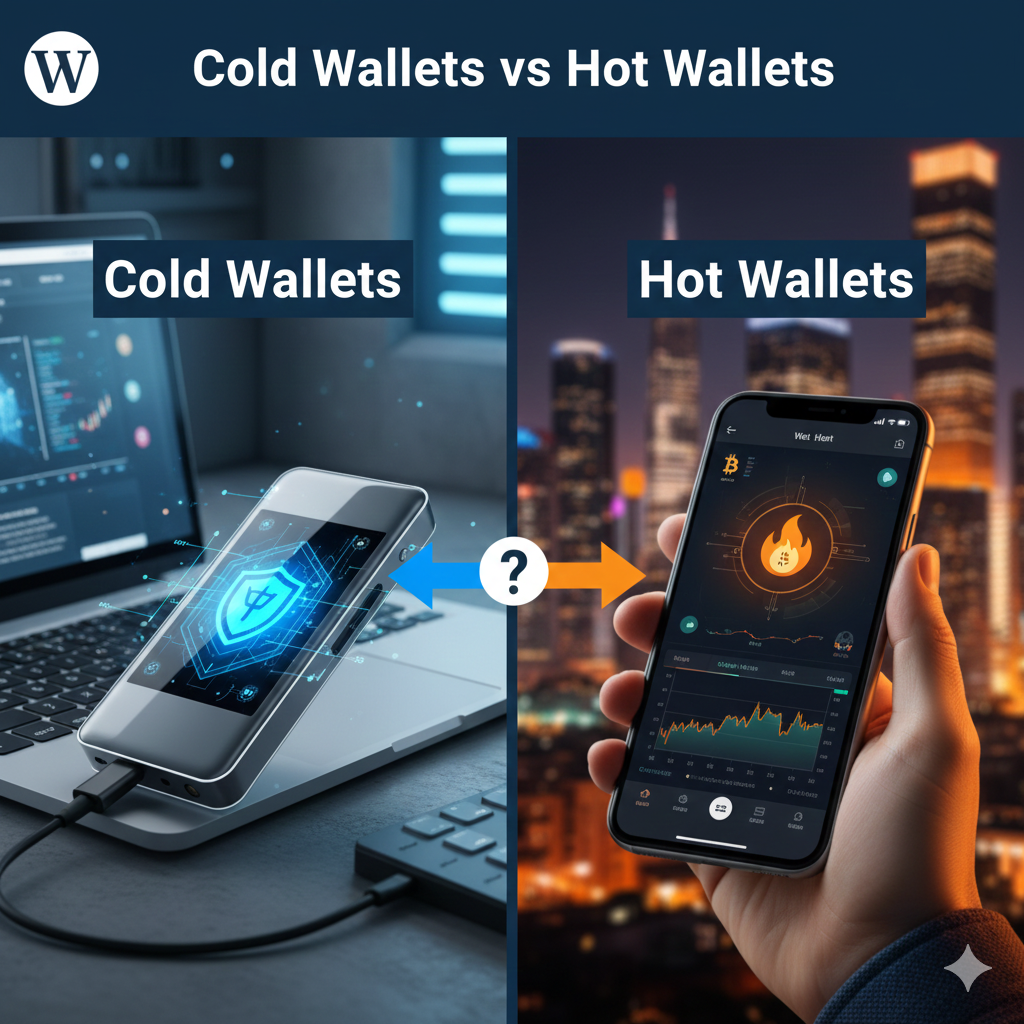
Which Is Better for Crypto Security?
As cryptocurrency adoption continues to rise in 2026, securing your digital assets has never been more important. One of the biggest decisions crypto investors face is choosing between cold wallets and hot wallets. Both serve the purpose of storing your crypto, but each offers different levels of security, convenience, and functionality.
In this guide, we break down the difference between cold and hot wallets so you can choose the right one based on your needs.
💡 What Is a Crypto Wallet?
A crypto wallet is a tool—hardware or software—that stores your private keys, allowing you to send, receive, and manage cryptocurrencies.
Wallets don’t store coins themselves (coins live on the blockchain) — they store the keys that let you access them.
🔥 What Is a Hot Wallet?
A hot wallet is connected to the internet. It can be a mobile app, desktop software, or web wallet.
Examples of Hot Wallets
- MetaMask
- Trust Wallet
- Coinbase Wallet
- Exodus
- Binance Wallet
✔ Advantages
- Easy to access
- Perfect for daily transactions
- Free or low-cost
- Beginner-friendly
✘ Disadvantages
- More vulnerable to hacking
- Private keys stored online
- Phishing and malware risks
Hot wallets are ideal for frequent trading, small funds, and beginners.
❄️ What Is a Cold Wallet?
A cold wallet is offline and stores your private keys without any internet connection. It is considered the safest option.
Types of Cold Wallets
- Hardware wallets (Ledger, Trezor)
- Paper wallets
- Air-gapped devices
✔ Advantages
- Maximum security
- Immune to online hacks
- Best for long-term storage
✘ Disadvantages
- Not as convenient
- Hardware wallets can be expensive
- Physical damage or loss is possible
Cold wallets are ideal for long-term holdings, large amounts of crypto, and investors prioritizing security.
🔄 Cold Wallets vs Hot Wallets: Key Differences
| Feature | Hot Wallet | Cold Wallet |
|---|---|---|
| Internet Connection | Online | Offline |
| Security Level | Medium | Very High |
| Ease of Use | High | Low–Medium |
| Ideal For | Daily use, small funds | Long-term storage, large funds |
| Risk of Hacks | Higher | Minimal |
| Cost | Usually free | Can be expensive |
🧠 When Should You Use a Hot Wallet?
Choose a hot wallet if you:
- Trade frequently
- Need quick access
- Use DeFi apps, NFTs, or Web3
- Are storing small to moderate crypto amounts
🛡️ When Should You Use a Cold Wallet?
Choose a cold wallet if you:
- Store large amounts of crypto
- Are holding coins long-term
- Want maximum security
- Want to avoid online threats
🏆 So, Which Is Better?
There is no “one-size-fits-all” solution.
Hot Wallet = Convenience
Cold Wallet = Maximum Security
Most experienced investors use both:
- Hot wallet → for transactions
- Cold wallet → for long-term storage
This hybrid approach provides the best balance of security and usability.
📌 Final Thoughts
Cryptocurrency security is all about controlling your private keys. Whether you choose a hot wallet, cold wallet, or a combination of both, always remember:
- Never share your seed phrase
- Enable 2FA where possible
- Only download wallets from official sources
- Store your backup phrase securely
Smart storage = safe crypto.
Make the choice that aligns with your goals.











Leave a Reply