

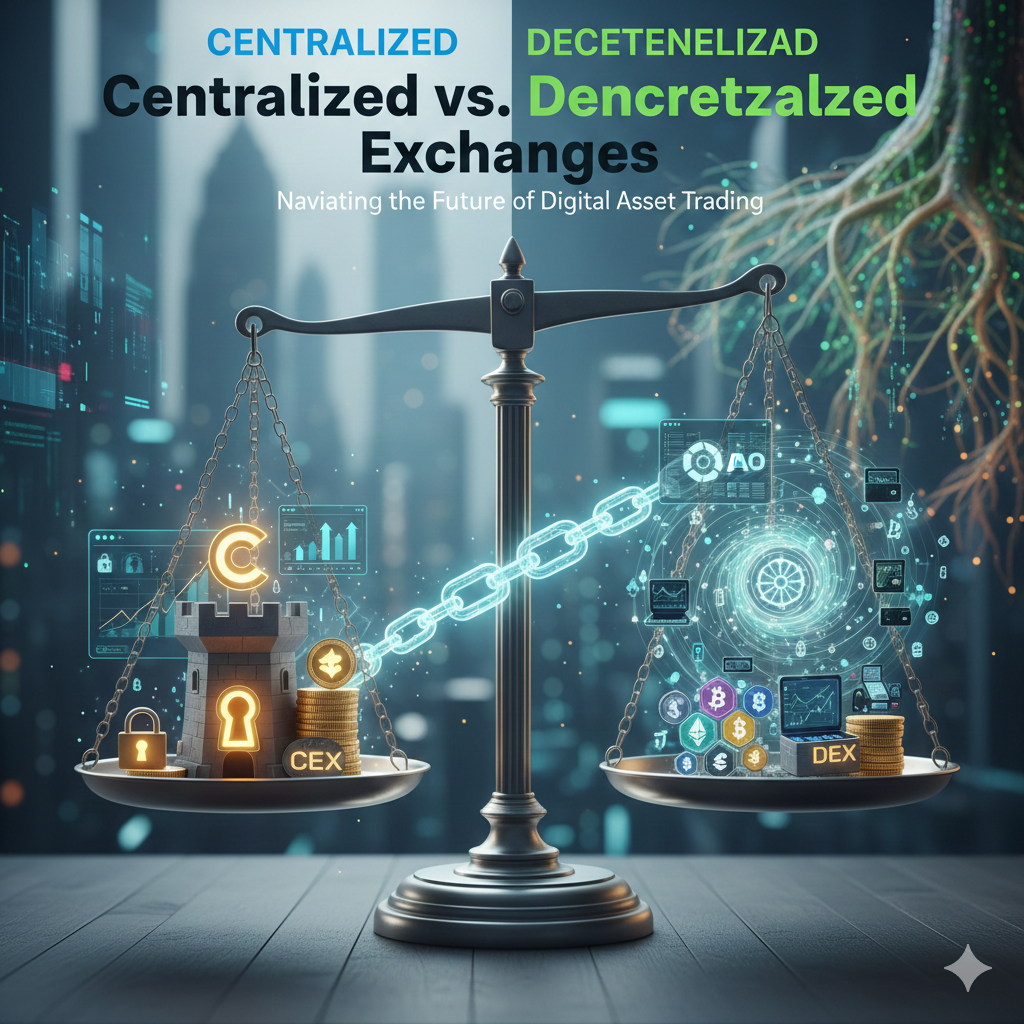
As cryptocurrency continues to evolve, choosing the right platform for trading has become increasingly important. Two major types of crypto exchanges dominate the market: Centralized Exchanges (CEXs) and Decentralized Exchanges (DEXs). Both serve the same purpose—buying, selling, and trading digital assets—but operate very differently. Understanding their strengths and weaknesses can help you make better trading decisions.
What Are Centralized Exchanges (CEXs)?
Centralized exchanges are cryptocurrency trading platforms managed by a central authority or company. Users deposit their funds into the exchange’s wallet and trade within the platform.
Examples: Binance, Coinbase, Kraken, Bybit
Advantages of CEXs
- ✔ User-friendly interface – Ideal for beginners
- ✔ High liquidity & fast transaction speed – Quick trade execution
- ✔ Customer support available – Help with issues & troubleshooting
- ✔ Advanced trading tools – Charts, futures trading, stop-loss orders, etc.
Disadvantages of CEXs
- ✖ Custodial control – Exchange holds user funds, creating risk if hacked
- ✖ KYC/verification required – Less privacy
- ✖ Withdrawal fees & trading fees vary
What Are Decentralized Exchanges (DEXs)?
Decentralized exchanges run on blockchain technology without a central authority. Users trade directly from their wallets using smart contracts.
Examples: Uniswap, PancakeSwap, dYdX, SushiSwap
Advantages of DEXs
- ✔ User retains full control of funds – Non-custodial
- ✔ Higher privacy – No mandatory KYC in most cases
- ✔ Access to new and trending tokens early
- ✔ Lower security risk from centralized breaches
Disadvantages of DEXs
- ✖ Can be complex for beginners
- ✖ Possible lower liquidity compared to CEXs
- ✖ Gas fees can increase trading costs (especially on Ethereum)
Key Differences: CEX vs DEX
| Feature | Centralized Exchanges (CEXs) | Decentralized Exchanges (DEXs) |
|---|---|---|
| Control of Funds | Exchange-owned | User-owned |
| Security | Risk of exchange hacks | Smart contract vulnerabilities |
| KYC Requirement | Yes (mostly) | Not always |
| Liquidity | Very high | Varies |
| Ease of Use | Beginner-friendly | Requires some blockchain knowledge |
| Fees | Moderate | Gas fees may apply |
| Anonymity | Low | High |
Which Is Better for You?
The choice depends on your priorities:
| If You Want… | Best Choice |
|---|---|
| Easy and fast trading | Centralized Exchanges |
| Full control over your crypto | Decentralized Exchanges |
| Customer support and safety nets | Centralized Exchanges |
| Anonymity and privacy | Decentralized Exchanges |
A balanced approach many traders use is a hybrid strategy—CEXs for ease of trading and DEXs for storing and investing with greater control.
Conclusion
Both centralized and decentralized exchanges play vital roles in the crypto ecosystem. CEXs offer ease of use, fast execution, and strong liquidity, while DEXs provide user independence, privacy, and transparent blockchain-based trading. Understanding the benefits and drawbacks of each will help you choose the option that aligns with your goals, risk tolerance, and trading style.




Leave a Reply